inside politics

Analysis of and commentary on South African politics.

SA Journalism: Prizes for everyone


FEATURE: Yet another round of South African journalism awards has just passed. Did you know there are some 82 of them? That’s an awards ceremony every four and a half days. Is South African journalism really such a worthy recipient of so much self-reflecting praise? Look at the Fourth Estate more closely and it seems rife with problems. But it would be you alone looking, certainly the mainstream media, despite so many protestations about its import and the value of self-regulation, is the last institution to cast a critical gaze over its own condition. But with so many awards on offer, why would it? Not when it can rather remind itself every few days just how excellent it truly is.

Read the rest of this entry »

The new Zuma painting: What have we learnt since ‘The Spear’?


FEATURE: The new ‘controversial’ painting of President Zuma, by Ayanda Mabulu, provides for us an interesting benchmark, against which we can measure what effect Brett Murray’s The Spear had on South Africa. Put another way: what did we learn from The Spear? Has our capacity for tolerance increased or decreased? And is our commitment to Freedom of Expression enhanced or denuded as a result of it? Time will provide the full answer to those questions. In the meantime, here are a few preliminary thoughts.

Read the rest of this entry »

The new painting of Jacob Zuma, by Ayanda Mabulu


FEATURE: President Zuma has brought this on himself. It is unfortunate, because much of the debate about this new painting (currently on exhibition at the AVA Gallery in Cape Town) will not be about the quality of the art, but all those euphemisms the ANC evokes to suppress freedom of expression – dignity, respect, culture, etc. I feel duty bound to post the picture, then, for two reasons: one, to demonstrate some consistency on this issue and two, to take a stand for freedom of expression, in the same way I did over The Spear. Thus, what follows below is the new painting of President Jacob Zuma, by artist Ayanda Mabulu. Read this blog to see it and, if you do, and you are sensitive about such things, make the choice to be offended and test your own tolerance and constitutional commitment. Choice is the essence of freedom, here is yours.

Read the rest of this entry »

On panic


SERIES: The Thing About is a weekly Business Day column designed to discuss democratic ideas, ideals, values and principles from a liberal perspective. Panic is often offered up as an explanation for rash action, but is it always a legitimate excuse? The answer to that question boils down to a determination as to whether or not a person could reasonably be expected to have been aware of their panic and, in turn, acted to control it. And, when it comes to widespread moral panic, the difference between good and bad leaders is often best defined by their approach to such problems.

Read the rest of this entry »

The Billion Rand President: A R1m day in the life of President Zuma


FEATURE: The privileges afforded President Zuma by the Ministerial Handbook – VIP protection; jet and helicopter flights; spousal support; etc – cost the taxpayer at least R522 million per five year term, or R105 million per year. If President Zuma is elected for a second term, his cost will escalate above, at least, R1 billion. To better illustrate how these various expenses mount up in practical terms, I have constructed a 24 hour day in the life of the President and then costed his various movements. Our imagined day works out at just over R1.1 million – to see how, read on [VIDEO and graphics included].

Read the rest of this entry »

Freedom cannot ever be completely controlled


ARTICLE: We should righlty fear control. Its limiting effect on freedom is, ultimately, a limiting effect on our unique nature and character as individuals. Its only purpose should be to safegaurd freedom itself, so that it might be best used and expressed. At our core, we are all free. It is true the nature of that freedom might be limited, even severly, but outside of death no constraint on freedom can ever be absolute and that is a glorious thing.

Read the rest of this entry »

Zero Worship


FEATURE: The manic adulation heaped unthinkingly on all our Olympians seems to have died down somewhat. And the events at Lonmin Mine adjusted our reaction to the endlessly repeated refrain that the Olympics ‘united’ us as a nation. So, perhaps now is as good a time as any to ask: did we really do that well at the Olympics? Is six medals the epitome of excellence or have we settled for mediocrity? In the article below, I argue South Africans seriously needs to readjust their expectations if we want to succeed and stop celebrating the average.

Read the rest of this entry »

On political analysis


SERIES: The Thing About is a weekly Business Day column designed to discuss democratic ideas, ideals, values and principles from a liberal perspective. Political analysis is a critical part of any healthy democracy. But understanding political decisions, as well as those things that motivate them, requires a certain amount of discretion: to be able to discern an honest motivation from a dishonest one. Too often, however, all political motivation is disregarded entirely as ill-concieved.

Read the rest of this entry »

The Billion Rand President: Update – R8.1m added in ‘Ferry Flights’


FEATURE: As and when new information comes to light, I shall aim to update and maintain ‘The Zuma Balance Sheet’ – the total costs of those privileges afforded President Zuma by the Ministerial Handbook. A new set of information about ‘Ferry Flights’ – empty flights by the Presidential Jet Inkwazi – has just been revealed by the DA. I have added the costs to the total. For the upwardly revised totals, read on.

Read the rest of this entry »

The Billion Rand President: How much Jacob Zuma costs the taxpayer


FEATURE: Cars, jets, VIP protection, spousal support, almost every week a new figure emerges suggesting that those privileges afforded President Zuma (and other members of the executive) are costing the taxpayer much money; but how much exactly is hard to say. No one has ever tried to total it all. The Presidency has certainly done everything in its power to shield the information. I have given it my best shot in the article below. It was a very difficult exercise but, using the Ministerial Handbook as a guide and by being very conservative, I have generated a total figure. To see it all set out, how much President Zuma costs per year and per term, and whether or not you think it’s excessive, read on.

Read the rest of this entry »

The Billion Rand President: Facts and Figures


FEATURE: As set out in detail in a previous article, the privileges afforded President Jacob Zuma by the Ministerial Handbook – cars, flights, accommodation, security, etc – total at least R514 million over the course of a five year term, or R102 million annually. Over two terms he would cost the public in excess of at least R1 billion. What follows below are a set of facts and figures drawn from those totals, as well as some comparative illustrations of what the various totals are equivalent to.

Read the rest of this entry »

On unity


SERIES: It’s hard these days, particularly in an environment where collectivism and nationalism hold so much sway, to go for any length of time without hearing a call for ‘unity’. It sounds good enough, but few take time to think about what such a call actually entails. What would a society look like that was absolutely unified? Surely it would be absolutely uniform in turn? When viewed in that light, the idea of unity takes on a different effect.

Read the rest of this entry »

The cheap moralising of Eusebius McKaiser


FEATURE: Political analyst Eusebius McKaiser has written an article, based on a recent lecture he gave, in which he argues that ‘spineless’ liberals retreat because they are scared of black intimidation. The way he makes his point, however, is deeply disingenuous. Indeed, he manipulates his text (changing the original point he made in his talk) to do so. In the process, he makes no sense and ‘lo and behold’, as he would say, contradicts himself. Read on to see how.

Read the rest of this entry »

On change


SERIES: The Thing About is a weekly Business Day column designed to discuss democratic ideas, ideals, values and principles from a liberal perspective. Today, a look at the idea of change – something which is very often resisted on the basis that the unknown is the source of unease and, to venture into it, is to risk the comfort of the status quo. So change often shares a particular relationship with both bravery and loss.

Read the rest of this entry »

Journalism 101: 1st Check facts; 2nd Write opinion


FEATURE: Chris Gibbons has written for the Daily Maverick an article which revolves around a central premise that is completely wrong. Thus, the whole article is wrong; likewise, all the conclusions he draws from it are wrongheaded. It’s a good example of poor journalism, not merely because the facts are all over the place, but because it relies so heavily on clichéd ideas that, given a moments consideration, are revealed to be flawed. Here is my response.

Read the rest of this entry »

On statistics


SERIES: Because they are far more objective in nature, statistics have a certain kind of power. That is, they allow those not entirely familiar with a situation to comment on it with authority, even insightfully. Little wonder, then, nationalists don’t like statistics and try to control and manipulate them. Ultimately, however, its a losing battle. Here’s why.

Read the rest of this entry »

Appearance and reality: Liberal values in democratic South Africa
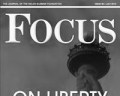

FEATURE: The Helen Suzman Foundation (www.hsf.org.za) has just produced edition 65 of its Journal, Focus. The edition is titled ‘On Liberty’ and devoted to exploring some of the challenges, both social and political, which have confronted South African liberalism. You can find a full copy of the edition here (PDF). Among of a range of pieces by the likes of Bobby Godsell, Charles Simkins, John Matisonn and Michael Cardo (I see Pallo Jordan even makes an appearance) is the piece I wrote, below, on liberal values and how they are often the subject of subtle negotiation, almost always to their detriment.

Read the rest of this entry »

Fresh off Twitter: Round 2 – the ANC again abuses power in eThekwini


FEATURE: Round 2 – more proof of how the ANC in eThekwini abuses power and undermines democracy, all of it fresh off Twitter where it has just happened. Read the summary and timelines of four DA councillors who describe how a Council meeting was hijacked, proper procedure ignored, oversight suppressed and the ANC’s agenda pushed through regardless. We don’t spend enough time focussing on what happens in local councils, if eThekwini is anything to go by, we have a lot to worry about.

Read the rest of this entry »

On arrogance


SERIES: The Thing About is a weekly Business Day column designed to discuss democratic ideas, ideals, values and principles from a liberal perspective. A common accusation today is to accuse someone of being ‘arrogant’. In doing so, however, arrogance is often confused with boldness and, in truth, it is the powerful who, not wanting to be contradicted, evoke the idea of arrogance to defend themselves.

Read the rest of this entry »

Johannesburg and nationalism: 1890 vs 2012


FEATURE: There are many parallels between the ANC’s particular brand of African nationalism and the nationalism practiced by previous governments in South Africa’s past. It is a comparison not often made but one which holds many lessons. Consider Johannesburg in the late 1800s for example: under the control of a nationalist administration it faced and created numerous problems which we face today and a description of the city back then, which follows below, sounds eerily familiar.

Read the rest of this entry »

On cant


SERIES: The Thing About is a weekly Business Day column designed to discuss democratic ideas, ideals, values and principles from a liberal perspective. Today a look at cant – when high ideals are evoked and language used merely to give the impression some grand plan is unfolding when, in truth, there exists a substantial gulf between what is said and what is actually done.

Read the rest of this entry »

How loyalty is used and abused


ARTICLE: Is there a difference between being loyal to a friend and being loyal to a country or cause? The principle is the same but the way in which loyalty is used by friends and governments differs greatly. Governments, particularly nationalist governments, demand loyalty; just as they demand evidence of it. What they fail to understand, however, is that all they are doing is encouraging obedience.

Read the rest of this entry »

The Ubuntu cuttlefish


FEATURE: In response to a recent article by Andrew Donaldson, titled ‘Let’s never mention Ubuntu again’, Barbara Nussbaum (former member of the Ubuntu Panel, which was part of the National Heritage Council of South Africa) has penned a long and ultimately meaningless response. In the article below I have responded to Nussbaum in turn and provided a general critique of Ubuntu – an idea I argue is ill-defined and, besides, redundant, in light of the Bill of Human Rights.

Read the rest of this entry »

36 Quotes from Jacob Zuma


FEATURE: I have been looking through the various wise things Jacob Zuma has said, in particular, before his election to the Presidency in 2009. And, seeing as I have them all to hand, I thought I would put together a list of some of his more infamous statements. I was struck by how often he came out in defence of President Mbeki’s HIV/Aids denialism, specifically as Deputy President. That said, in no particular order, here are 36 quotes from Jacob Zuma.

Read the rest of this entry »

On diversity


SERIES: The Thing About is a weekly Business Day column designed to discuss democratic ideas, ideals, values and principles from a liberal perspective. At the social cohesion summit, President Jacob Zuma told the audience, “we have to build one national identity out of multiple identities”. It was a thought typical of nationalistic thinking, which routinely fails to understand diversity and its importance.

Read the rest of this entry »

Zuma’s Zapiro investment strategy


FEATURE: Jacob Zuma’s defamation case against Zapiro – the cartoonist Jonathan Shapiro (not David, ANCWL) – is due to be heard by the courts in October. In the meantime, Zapiro is enjoying some rather intense political attention after he suggested, in a more recent cartoon, Zuma is a ‘dick’. In the article below, Adv. Mark Oppenheimer looks at Zuma’s prospects for success with regards to Zapiro’s ‘raping’ of Lady Justice cartoon; and it appears the President faces an uphill legal battle if he is to win. Here’s why.

Read the rest of this entry »

Consultation requires an open mind


ARTICLE: We are often told that, in order to achieve a certain outcome, there will be a process of consultation. But is this word commonly understood to mean there is the possibility an initial position might change, or to mean that one’s initial position has merely been successfully communicated? There is a strong case to be made there exists some serious confusion about consultation’s purpose, sometimes with serious consequences.

Read the rest of this entry »

The ANC’s top 20 violent fights


FEATURE: Everyone knows the ANC is factionalised and infighting is rife but how bad is it? We hear scattered reports of violence and mayhem at ANC meetings but do we have the full picture? In an attempt to demonstrate just how serious the divisions are and to what extent the party is, literally, at war with itself, I present the ANC’s top 20 violent fights: a range of examples of how the party has turned in on itself over the past few years and the bloody consequences.

Read the rest of this entry »

On clichés


SERIES: The Thing About is a weekly Business Day column designed to discuss democratic ideas, ideals, values and principles from a liberal perspective. Cliches are now so common their effect has been denuded of its value – instead of enliving debate, they dull it down. And, with their over-use, has come the uncritical perception they suggest wisdom and knowledge. A perception often abused by those whom evoke and hide behind their empty meaning.

Read the rest of this entry »

Why has Cape Town hosted Bafana Bafana just four times in 19 years?


FEATURE: Did you know Cape Town has hosted Bafana Bafana just four times in 19 years? That is a fairly remarkable fact. The city is hardly the sporting backwaters. In fact, almost every argument you can come up with against Cape Town hosting the national soccer team does not, on the evidence, appear to hold any weight. To see who has hosted the most games and why Cape Town deserves to see the national team more often, read on.

Read the rest of this entry »

Why Stormers rugby supporters are statistically the best


FEATURE: That headline got your attention, didn’t it? (Apologies to Tina Turner). Here follows a lighthearted story for a Friday. I have put together all the attendance figures for South Africa’s home matches in this year’s Super 15 rugby competition. From the title you will have already guessed which team boasts the support base that turns out in the largest numbers but, if you’d like all the facts and figures, the best and the worst, here they all are – read on; well, unless you’re a Sharks fan, in which case you should probably be at the stadium.

Read the rest of this entry »

On binary thinking


SERIES: The Thing About is a weekly Business Day column designed to discuss democratic ideas, ideals, values and principles from a liberal perspective. Binary thinking – the idea that, in any situation, a person has only two choices – is pervasive. Moralisers reinforce the idea – their favourite two choices being ‘good’ and ‘bad’. Inevitably though, on closer inspection, there will exist far more than just two options and education and knowledge are key to being able to recognise this.

Read the rest of this entry »

7 of the worst: How the ANC rewards corruption


FEATURE: Jacob Zuma yesterday used his speech to the ANC’s 2012 policy conference to speak out against what he called ‘alien tendencies’ in the party – things like corruption and the abuse of power. Who did he think he was kidding? Zuma has himself rewarded those very things. By way of illustration, here is a list of seven ANC MPs, all found guilty in the Travelgate scandal, all re-elected, most rewarded with promotion (by Zuma) and including their salaries – so you can see just how much political loyalty costs.

Read the rest of this entry »

The best of Inside Politics


FEATURE: Inside Politics has now been up and running for five months. I thought I would use the opportunity to provide a helpful overview of some of the more popular articles that have been featured during that period. I have summerised them by type and included a rough word guide, so you know what you are getting. I hope you enjoy the summary. If its in-depth investigative reasearch you into, breaking news, opinion or liberal ideas, its all here. Have a read and, if you like it, recommend it to others.

Read the rest of this entry »

How Sadtu and the SACE have damaged accountability in SA education


FEATURE: The South African Council for Educators is the primary institution charged with upholding accountability in South African education. It does so by enforcing a Code of Professional Ethics for educators. Or, at least, that is what it is supposed to do. In truth, however, it has effectively fired just 97 educators in 12 years. At the heart of the problem is Sadtu, which dominates the SACE council and ethics committee. Its influence, together with the SACE’s wrongheaded approach, has rendered educator accountability in South African education a farce. Read on to see how.

Read the rest of this entry »

The relationship between hope and time


ARTICLE: You don’t often think about it this way but hope is actually all about how you understand time. If you have hope, with it you have perspective and the idea that the future might be better. In the other direction, if one has no hope, there is no prospect of a better future and so time and perspective are reduced to contemporary concerns. There is only the here and now and the need to overcome the challenge that currently exists right before your eyes.

Read the rest of this entry »

Fresh off Twitter: How the ANC in eThekwini abuse public money


FEATURE: Not more than an hour ago there was a huge argument between the DA and the ANC in the eThekwini council over a proposal to send an under 15 soccer team to South Korea: the ANC said two councillors should accompany them, then, when the DA opposed the idea, increased the number to five, unilaterally voted in support of their amendment and ignored a legal opinion in doing so. Here is an account of the story as it happened in council and told through the Tweets of three young DA councillors: Warwick Chapman, Mbali Ntuli and Nicole Graham.

Read the rest of this entry »

VIDEO: A Youth Wage Subsidy now!


VIDEO: Here is a great video from the DA Youth, explaining what a Youth Wage Subsidy is and the difference it would make to the lives of young, unemployed South Africans. I am not sure why it has not been more widely circulated but it is well worth a look at. Some good interviews with some people affected and shots of the DA rally in favour of the subsidy, which Cosatu reduced to a violent and bloody mess. Check it out.

Read the rest of this entry »

Phiyega’s gallery of gobbledegook


FEATURE: The new police commissioner, Mangwashi Phiyega, has a wonderful way with words. Never before has a senior member of civil service squeezed so many metaphors and idioms into so little content. Is she the police’s answer to Pieter de Villiers? In order to make sure they are all captured for posterity and I am starting a running archive of her best sayings. Here it is.

Read the rest of this entry »

On patriarchy


SERIES: The Thing About is a weekly Business Day column designed to discuss democratic ideas, ideals, values and principles from a liberal perspective. Today, a look at the relationship between patriarchy and dignity. Why is it that a patriarch will so easily feel their dignity has been impugned? The answer has to do with the assumption that they bear no responsibility for upholding it in the first place.

Read the rest of this entry »

Cyril Ramaphosa on the need for an independent SABC, in 1992


SERIES: From the Archives aims to put forward the odd reminder that, more often than not, history is merely repeating itself. In all likelihood, somewhere, someone has already experienced and commented on those all-consuming issues that appear to have materialised only yesterday. Here follows a 1992 speech by Cyril Ramaphosa, about how important an independent SABC was and how the National Party had abused the public broadcaster to serve its own political ends. 20 years later and there is a case to be made South Africa has yet to actually experience an independent SABC.

Read the rest of this entry »

South Africa is not Russia


ARTICLE: Wilmot James has written an article on Blade Nzimande and the SACP for the City Press, which I have republished in full here. It is a pertinent follow-up to the article I wrote about Jeremy Cronin a week or so ago and asks important questions about some of the more dubious positions the SACP has adopted in the past. City Press notes that the SACP failed to meet the deadline to respond to Wilmot.

Read the rest of this entry »

The ANC and John Dugard: Feeding the hand it bites


FEATURE: This April past President Zuma awarded John Dugard the national order of the Baobab. It was a recognition well deserved; John Dugard’s contribution to South African jurisprudence is extraordinary. Likewise, however, it was a deeply hypocritical gesture. The ANC has for years spurned Dugard, blocking his appointment to many key positions, including the Constitutional Court. But that is the nature of nationalism: to fete the very things it despises. Here follows a Business Day article I wrote on this subject this week.

Read the rest of this entry »

The DA’s 2006 bill to hold unions accountable


SERIES: The instantaneous and dramatic nature of current affairs lends itself to a kind of historical amnesia, one where the captivating nature of those things unfolding today, causes one to forget the bigger picture. From the Archives aims to put forward the odd reminder that, more often than not, history is merely repeating itself. In all likelihood, somewhere, someone has already experienced and commented on those all-consuming issues that appear to have materialised only yesterday. Today, the DA’s 2006 Private Members Bill designed to hold unions accountable for any damage caused during striking, an idea recently endorsed by the Constitutional Court.

Read the rest of this entry »

An analysis of the Press Ombudsman’s rulings: The best and worst


FEATURE: Which newspapers in South Africa have the most complaints made to the Press Ombudsman upheld against them? In order to answer this question, I analysed all of the last three years worth of rulings on the Ombudsman’s website and categorised them by paper. Want to see who fares best and who fares worst? It is a crude analysis but, I believe, it does offer some valuable insights. For all the answers, read on.

Read the rest of this entry »

On gossip


SERIES: The Thing About is a weekly Business Day column designed to discuss democratic ideas, ideals, values and principles from a liberal perspective. Gossip and politics seem to be inseparable, so it is worth trying to understand gossip a bit better and the kind of role it plays for many in political life – and it’s not a pleasant one. Here, then, is why those who deal predominantly in gossip are not to be trusted.

Read the rest of this entry »

How the WC Office of the Premier scored best in PSC report


FEATURE: The Public Service Commission recently published a report assessing the performance of the nine Offices of the Premier. The only Office of the Premier not run by the ANC – in the Western Cape – came out on top. What follows is a summary of that report and a more detailed look at how the DA-run Western Cape Office of the Premier faired. There is some critical information in this article and some invaluable statistics. All in all, further proof that, where the DA governs, it delivers better services than the ANC, to more people.

Read the rest of this entry »

South Africa and the 1994 memory block


FEATURE: There is a strong case to be made that contemporary South African history – post 1994 – is subject to some kind of collective memory block. So horrific was apartheid, we have lost the ability properly to put current affairs in their full perspective. Inevitably any event is gauged, not against the principles that define freedom, but those gross violations suffered in the past. Remembering the past is vital but it should never blur our ability to recognise those contemporary threats to our civil liberties.

Read the rest of this entry »

The ANC and the history of Mao’s infamous quote


SERIES: My article yesterday, on Jeremy Cronin and his amoral hypocrisy, seems to have elicited some significant interest in this subject. It surely is a curious fact that socialism and those who advocate it enjoy next to no moral scrutiny for the blood-soaked history they represent. Indeed, they seemingly operate in an entirely ahistorial environment. So much so, they routinely evoke socialist rhetoric with no appreciation for what it represents. Mao’s ‘let a thousand flowers bloom’ quote is a great example. Here follows an article from the archives, which looks at the way this quote is misused by the alliance. Cronin accused ‘pseudo liberals’ of ‘historical illetracy’, time to take a look in the mirror I say.
Read the rest of this entry »

The mischievous deviousness of Jeremy Cronin


FEATURE: Jeremy Cronin, along with a great many other people in the alliance, constantly suggest liberalism was the source of much wrong in South Africa’s past, and should therefore be dismissed. They are wrong on the facts. But that’s not the point. If it’s historical injustice the SACP wants to speak out against, it should take a look in the mirror – because socialism is responsible for mass murder on an unprecendeted scale. If anyone has some explaining to do, its the SACP. And someone should ask them to start.

Read the rest of this entry »

inside politics

Analysis of and commentary on South African politics.

Skip to content ↓