inside politics

Analysis of and commentary on South African politics.
Category: ANC
13 November 2025
Election 2026/7 [7] Turnout, Buffalo City, the ANC and DA

A comprehensive look at turnout trends in Buffalo City, with a focus on the ANC and DA. Historical data suggests Buffalo City is the one metro where the ANC has a credible path to 50%. That is not to say it is a likely path, but a path none-the-less. Its enemy here is apathy, as it is everywhere, only the DA is far less of a concern.
Read the rest of this entry »27 October 2025
Election 2026/7 [6] Turnout, Nelson Mandela Bay, the ANC and DA
A comprehensive look at turnout trends in Nelson Mandela Bay, with a focus on the ANC and DA. Both the ANC and the DA are decline here. Both had the potential for a 50% majority but, the data suggests, no more. Rather, what we are seeing is an attritional fight between the two for diminishing returns, and only more voter enthusiasm will solve that.
Read the rest of this entry »21 October 2025
Election 2026/7 [5] Turnout, Mangaung, the ANC and DA
A comprehensive look at turnout trends in Mangaung, with a focus on the ANC and DA. The ANC is still in decline here, but there is no cliff its support has fallen off, at least not yet – more a slow, gradual erosion. As of 2024, the party is still above 50% in the metro, just, but all indications are this ANC majority will fall too, in the near future.
Read the rest of this entry »14 October 2025
Election 2026/7 [4] Turnout, eThekwini, the ANC and DA
A comprehensive look at turnout trends in eThekwini, with a focus on the ANC and DA. eThekwini is arguably South Africa’s most dramatic metro: broad competition, huge swings in support and thus, a very volatile political landscape. And it is in the middle of exactly such an upheaval with, it seems, much more to come.
Read the rest of this entry »3 October 2025
Election 2026/7 [3] Turnout, Ekurhuleni, the ANC and DA
A comprehensive look at turnout trends in Ekurhuleni, with a focus on the ANC and DA. The ANC’s support appears to be in an exponential decline and, as a result, the DA needs only the smallest differential turnout advantage to make a profound impact. But the turnout trends are not on the DA’s side, and it is going to require something special.
Read the rest of this entry »23 September 2025
Election 2026/7 [2] Turnout, Tshwane, the ANC and DA
A comprehensive look at turnout trends in Tshwane, with a focus on the ANC and DA. All-in-all, a marginally better picture for the ANC and DA, but that is only relative to Johannesburg. Both parties have serious problems, and it would seem like higher turnout is the only way either are going to solve them.
Read the rest of this entry »10 September 2025
Election 2026/7 [1] Turnout, Johannesburg, the ANC and DA
A comprehensive look at turnout trends, starting nationally and moving to Johannesburg, with a focus on the ANC and DA. All indications are the ANC is in terminal decline, a problem exacerbated by low turnout; however, the DA has problems of its own on this front, and few places make the case better than Johannesburg.
Read the rest of this entry »23 April 2025
Public perceptions on Kill the Boer
The Social Research Foundation (SRF) recently commissioned a short, nationally representative survey on public perceptions around free speech, hate speech and the song Kill the Boer. The survey was conducted by Victory Research (of which I am the CEO). The SRF was kind enough to let me set out the findings. What follows is a summary of the key insights.
2 July 2024
Election 2024 [16]: Full demographic profiles of ANC, DA, MK, EFF and IFP support
Thread: “Full demographic profiles of ANC, DA, MK, EFF and IFP”. Mapping the support of each party by age, employment status, monthly income, residential area, population group, educational level, first language, province and gender.
Read the rest of this entry »24 June 2024
Election 2024 [15]: Mapping ANC, DA, MK and EFF support by race
Thread: “Mapping ANC, DA, MK and EFF support by race” This thread maps the 2024 Election support for the big four political parties – the ANC, DA, MK and EFF – by race, with an emphasis on Black voters, how they are distributed and the degree to which they turned out.
Read the rest of this entry »13 February 2024
Election 2024 [11] Immediate takeaways from the latest SRF KZN poll
A thread: “Immediate takeaways from the latest SRF KZN poll”. This thread looks at the latest SRF market survey in KwaZulu-Natal, and some of the national and provincial implications that flow from MK’s performance in it.
Read the rest of this entry »7 February 2024
Election 2024 [10] Scenarios: Can the ANC avoid falling below 50% in Gauteng?
A thread: “Can the ANC avoid falling below 50% in Gauteng?” This thread looks at approximately 350 Gauteng turnout scenarios, with a view to determining how easy or difficult it is the for ANC to get over 50%.
Read the rest of this entry »4 February 2024
Election 2024[9] Can the ANC fall below 50% in the Free State?
A thread: “Can the ANC fall below 50% in the Free State?” This thread maps the ANC’s performance in the Free State down to municipal level, with a view to determining where it is weakest and strongest, and what turnout scenarios would result in it falling below 50% in 2024.
Read the rest of this entry »24 January 2024
Election 2024 [7] What would happen if Rise Mzansi, the PA, BOSA and ASA achieved their election goals?
A thread: “What would happen if Rise Mzansi, the PA, BOSA and ASA achieved their election goals? This thread looks at the 2024 election predictions made by these parties, and what they would mean in real terms, if they ever came to pass.
Read the rest of this entry »18 January 2024
Election 2024 [6]: How did the EFF do so well in 2019?

A thread: “How did the EFF do so well in 2019?” This thread looks at the EFF, and its performance in the 2019 national and provincial elections – how it grew, where it grew and what factors drove its growth.
14 January 2024
Election 2024 [5]: Scenarios: Why it is so difficult to get the ANC below 50%

A thread: “Scenarios: Why it is so difficult to get the ANC below 50%”. This thread looks at approximately 500 national turnout scenarios, with a view to determining how easy or difficult it is the for ANC to get to 50% nationally.
Read the rest of this entry »31 May 2019
Patricia “Kortbroek” de Lille
 After a lifetime of anti-ANC sentiment and on the back of a political career that, ultimately, was only ever a small rickety temple to her own ego, Patricia de Lille has whitewashed a library full of contempt for the ANC, by joining the ANC Cabinet. She is a modern day Marthinus van Schalkwyk. And so, to her should go the title “Kortbroek”, which came to define his particular brand of expediency.
11 January 2019
The Zumaphosa Monitor
 Search as hard as you can, you won’t final a single critical word from President Cyril Ramaphosa about former President Jacob Zuma. That’s the Jacob Zuma, the man who brought South Africa to the brink. What you will find, however, is praise, and a lot of it. The Zumaphosa Monitor is designed to track everything Ramaphosa has said about Jacob Zuma in the hope that, one day, he might actually have a critical word to say directly about the former President. When he does, it will shut down.
17 August 2015
The ANC, religion and ‘the truth’
SPEECH: This past Tuesday I delivered an address on the ANC, religion and ‘the truth’. For those interested, a copy of that speech follows below. It argues that there is much to be understand about the ANC when it is viewed not as a political party but a religious movement and explores what happens when a party which once held a monopoly over ‘the truth’ suffers a crisis of legitimacy?
22 June 2014
Jacob Zuma: The man who walks in two worlds
 SPEECH: This past Thursday I delivered an address on President Jacob Zuma to The Cape Town Press Club. For those interested, a copy of that speech follows below. It speaks to some of the themes identified in my book, “Clever Blacks, Jesus and Nkandla: The real Jacob Zuma in his own words”, and looks at the extent to which the fourth estate meaningfully interrogates Zuma’s various problematic religious and cultural convictions.
8 May 2013
The ANC’s dubious donors
 ARTICLE: I am going to try and keep Inside Politics going but my new commitments will make writing more sporadic and so, along with the odd post from the archives, so to speak, I shall probably keep things shorter. That said, the article below, originally published in 2007, is still relevant today: a good illustration of how the ANC historically placed its own financial condition ahead of any human rights considerations that might curtail from whom it solicited donations. That fact still holds true today, even if the donors are more often domestic than international. It sets out of some of the party’s more more dubious funders and what the papers said about each donation at the time.
14 April 2013
Dealing with apartheid’s legacy: The Lee/Manuel correspondence
 FEATURE: Much has been made of Trevor Manuel’s recent comments on apartheid and whether or not it constitutes a valid excuse for poor service delivery. One area relevant to the debate, on which Manuel has been very outspoken in the past but did not address in his speech, is quotas in sport. In 2005 he set out his views in an exchange of letters with DA MP Donald Lee. I have set them all out in this article. Thus, one question perhaps worth putting to Manuel today, is whether or not he still thinks they are necessary.
11 April 2013
Is Marius Fransman a flight risk?
 FEATURE: Marius Fransman, ANC leader in the Western Cape, has recently been making much noise, largely on the back of a volunteer drive designed to take back the province from the Democratic Alliance in 2014. But a 2009 Wikileaks cable suggests Fransman is not necessarily the right man to be leading the charge, as he was apparently all but ready to abandon the party for COPE, ahead of the last election. So, one question worth putting to the man is: are you really committed to the ANC?
8 April 2013
The selective moral outrage of Trevor Manuel
FEATURE: Trevor Manuel has made a point over the last two years of openly criticising the ANC and the ANC government on a range of different issues. Each time his outspoken ‘honesty’ has been met with much praise and acclaim. But it is selective moral outrage on Manuel’s part and, if he really is interested in setting himself apart from the ANC, then he has much explaining to do – starting with his years of complicit silence as Thabo Mbeki damaged the foundations of our democracy.
5 March 2013
Jacob Zuma’s top ten most disturbing cultural quotes
FEATURE: President Jacob Zuma, the highest custodian of the human rights principles and values set out in our constitution, spends a great deal of time undermining them, by advocating for a series of ‘African’ cultural beliefs that, almost without exception, are prejudiced in some way. If not prejudiced then so poorly articulated they cause an inevitable outrage and his political minders – the spokespeople in the ANC and the Presidency – are sent in to clean up after the damage he has caused. Below is a list of examples and, in each case, the kind of damage control that followed.
12 February 2013
Mamphela Ramphele and the triumph of narcissism over strategy
 FEATURE: Mamphela Ramphele is due to make a significant announcement on Monday. All indications are she will announce, at least, the framework for a new political party; no doubt with her at the helm. If she does, it will represent the triumph of ego over sound political analysis and, as a result, the indulgence of narcissism above South Africa’s best interests. That, and a failure to learn from history. Here is why.
29 January 2013
The ANC’s top ten ‘treasonous’ people
FEATURE: As the ANC has turned its bullying gaze towards First National Bank, so one of its perennial slurs has once again been invoked – ‘treason’, and the suggestion that FNB was attempting to overthrow the government. It is a hysterical and wholly inaccurate accusation, designed to silence criticism and shut down debate – and FNB is not the first to be labelled ‘treasonous’ by the ANC. Here follows a list of ten such instances. In each case the charge is outlandish and wrong, and, in each case, it is used as a response to disagreement rather than any actual threat. Perhaps more importantly, together they describe a party out of touch both with reality and its own history.
25 January 2013
The ANC and FNB: Treason for some, freedom of speech for others
 FEATURE: Here follow two 2009 election adverts. The first is from the Freedom Front Plus, the second from the African Christian Democratic Party. Both are harrowing and aim to induce much fear in the viewer about the state of South Africa, in an attempt to win their support. Compared to the FNB advert, they are extreme and make no attempt to allude to a problem in inspirational language. Rather they are cut-throat, highly provocative and damning of the government. One is forced to ask, given that there is so much unhappiness on the ANC’s part about the mild FNB ad, why neither of these two parties were ever labelled as ‘treasonous’?
17 September 2012
The Ten Commandments according to Jacob Zuma
 FEATURE: Jacob Zuma has, over the last five years, spent much time advocating his and the ANC’s religious credentials: that his is a party endorsed by God, that it will rule till the end of days, that its enemies will suffer damnation, that he is like Jesus, even that an ANC membership card is a ticket into heaven. I have organised all his religious rhetoric into ten key ideas – everything Jacob Zuma has ever said about the ANC and religion. Not only does it serve as a helpful archive but jointly and separately his statements paint a picture of a profoundly undemocratic leader with scant regard for the constitution or the basic tenets of democracy [GRAPHIC included].
13 September 2012
The ANC Chief Whip: Where there’s smoke, there’s fire
FEATURE: Why did the ANC react so extremely to criticism of its Chief Whip last week? Remember, this is the same party that ignored far more serious criticisms in the past. Something about the public airing of this latest problem – that the ANC Chief Whip has attended just 11 of 19 key parliamentary meetings – really upset the ANC. One explanation, which seems plausible on the evidence, is that his dire performance provides the perfect opportunity to “redeploy” someone the powers that be do not believe has the right political loyalties come Mangaung.
6 September 2012
ERROR: ANC-run provinces do not compute
 FEATURE: Some four months ago – more than 120 days past – I documented how the websites for 18 ANC-run provincial departments were broken. I recently revisted them all again, to see if anything had changed. Nothing had. In fact, 19 are now broken and, of them, 15 have been broken since April (possibly longer). As in April, the only exception was the DA-run Western Cape Government. Its websites not only worked perfectly but were the most user-friendly. That tells you much about the attitude of those governments to transparency and accountablity; for access to government information is your right. To see which didn’t work and why, read on. [GRAPHIC included]
5 September 2012
Petrol price increase “indefensible”: ANC
 SERIES: A good quote can hold within it a thousand separate insights, just as surely as some poorly constructed thought can reveal someone as a fool. Quotable Quotes looks at what is said, what was said and, on occasion, how the two compare. A lot of people forget but the ANC was once in opposition – from 1990, when it was un-banned, to South Africa’s first democratic election, in April 1994. Perhaps not formally elected but, for that period of time and in the run-up to 94, it assumed the role. Here are a few quotes from the ANC back then. I wonder how the ANC has held up in government against the standard it set when it was in opposition?
2 September 2012
On moral outrage and bad journalism
 FEATURE: In late 2010 the DA removed Sowetan journalist Anna Majavu from its mailing lists. In 2011, the mainstream press found out and the response, fuelled by the ANC, was so hysterical looking back it puts the outcry over The Spear in a whole different light. We seem to specialise in hysteria and moral outrage in South Africa. In the 2011 article below, I responded to all the vitriol and tried to put the decision in its proper perspective. I note with some irony that today the DA is still around, Anna Majavu, however, has abandoned South Africa for Australia.
2 September 2012
Trevor Manuel and the ghost between the lines
FEATURE: Trevor Manuel, like Thabo Mbeki before him, is no stranger to mispresentation in order to try and make his point. In 2009 he took issue with a number of critics who suggested that Springbok coach Pieter de Villiers was not up to the job, acussing them, effectively, of racism. On one such occassion he responded to Business Day editor Peter Bruce with an argument that not only warped what Bruce had actually said, but contradicted his previous position in doing so. In the article below I tried to set out why his argument was both flawed and devious.
2 September 2012
Mbeki as Jekyll and Hyde
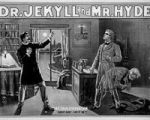 FEATURE: The book, ‘The strange case of Dr Jekyll and Mr Hyde’ provides a helpful metaphor in better understanding the relationship between the two offices which defined Mbeki’s time at the apex of South African politics. In this 2008 article I looked at these two positions held by former President Thabo Mbeki – ANC president and South African president – and offered some insights as to how they merged, to the detriment of his own aspirations and South Africa’s democracy.
30 August 2012
South African Political Dictionary: Cadre employment and cadre deployment
 SERIES: I have noticed over the past few weeks a number of political analysts and commentators using the phrase ‘cadre employment’ when, in fact, they mean ‘cadre deployment’. An intentional euphemism or not, it is perhaps worth properly defining and legitimating. It could explain much about the ANC’s attitude to tenders, for example. But, whether defined or not, it should be distinguished from ‘cadre deployment’ which is something else entirely. I try to explain the difference below.
28 August 2012
The new painting of Jacob Zuma, by Ayanda Mabulu
 FEATURE: President Zuma has brought this on himself. It is unfortunate, because much of the debate about this new painting (currently on exhibition at the AVA Gallery in Cape Town) will not be about the quality of the art, but all those euphemisms the ANC evokes to suppress freedom of expression – dignity, respect, culture, etc. I feel duty bound to post the picture, then, for two reasons: one, to demonstrate some consistency on this issue and two, to take a stand for freedom of expression, in the same way I did over The Spear. Thus, what follows below is the new painting of President Jacob Zuma, by artist Ayanda Mabulu. Read this blog to see it and, if you do, and you are sensitive about such things, make the choice to be offended and test your own tolerance and constitutional commitment. Choice is the essence of freedom, here is yours.
21 August 2012
The Billion Rand President: Update – R8.1m added in ‘Ferry Flights’
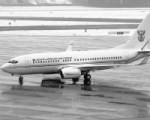 FEATURE: As and when new information comes to light, I shall aim to update and maintain ‘The Zuma Balance Sheet’ – the total costs of those privileges afforded President Zuma by the Ministerial Handbook. A new set of information about ‘Ferry Flights’ – empty flights by the Presidential Jet Inkwazi – has just been revealed by the DA. I have added the costs to the total. For the upwardly revised totals, read on.
20 August 2012
The Billion Rand President: How much Jacob Zuma costs the taxpayer
 FEATURE: Cars, jets, VIP protection, spousal support, almost every week a new figure emerges suggesting that those privileges afforded President Zuma (and other members of the executive) are costing the taxpayer much money; but how much exactly is hard to say. No one has ever tried to total it all. The Presidency has certainly done everything in its power to shield the information. I have given it my best shot in the article below. It was a very difficult exercise but, using the Ministerial Handbook as a guide and by being very conservative, I have generated a total figure. To see it all set out, how much President Zuma costs per year and per term, and whether or not you think it’s excessive, read on.
20 August 2012
The Billion Rand President: Facts and Figures
 FEATURE: As set out in detail in a previous article, the privileges afforded President Jacob Zuma by the Ministerial Handbook – cars, flights, accommodation, security, etc – total at least R514 million over the course of a five year term, or R102 million annually. Over two terms he would cost the public in excess of at least R1 billion. What follows below are a set of facts and figures drawn from those totals, as well as some comparative illustrations of what the various totals are equivalent to.
30 July 2012
Fresh off Twitter: Round 2 – the ANC again abuses power in eThekwini
 FEATURE: Round 2 – more proof of how the ANC in eThekwini abuses power and undermines democracy, all of it fresh off Twitter where it has just happened. Read the summary and timelines of four DA councillors who describe how a Council meeting was hijacked, proper procedure ignored, oversight suppressed and the ANC’s agenda pushed through regardless. We don’t spend enough time focussing on what happens in local councils, if eThekwini is anything to go by, we have a lot to worry about.
4 July 2012
The ANC’s top 20 violent fights
FEATURE: Everyone knows the ANC is factionalised and infighting is rife but how bad is it? We hear scattered reports of violence and mayhem at ANC meetings but do we have the full picture? In an attempt to demonstrate just how serious the divisions are and to what extent the party is, literally, at war with itself, I present the ANC’s top 20 violent fights: a range of examples of how the party has turned in on itself over the past few years and the bloody consequences.
27 June 2012
7 of the worst: How the ANC rewards corruption
 FEATURE: Jacob Zuma yesterday used his speech to the ANC’s 2012 policy conference to speak out against what he called ‘alien tendencies’ in the party – things like corruption and the abuse of power. Who did he think he was kidding? Zuma has himself rewarded those very things. By way of illustration, here is a list of seven ANC MPs, all found guilty in the Travelgate scandal, all re-elected, most rewarded with promotion (by Zuma) and including their salaries – so you can see just how much political loyalty costs.
20 June 2012
Fresh off Twitter: How the ANC in eThekwini abuse public money
 FEATURE: Not more than an hour ago there was a huge argument between the DA and the ANC in the eThekwini council over a proposal to send an under 15 soccer team to South Korea: the ANC said two councillors should accompany them, then, when the DA opposed the idea, increased the number to five, unilaterally voted in support of their amendment and ignored a legal opinion in doing so. Here is an account of the story as it happened in council and told through the Tweets of three young DA councillors: Warwick Chapman, Mbali Ntuli and Nicole Graham.
21 May 2012
Albie Sachs on South African art in 2000
 SERIES: A good quote can hold within it a thousand separate insights, just as surely as some poorly constructed thought can reveal someone as a fool. Quotable Quotes looks at what is said, what was said and, on occasion, how the two compare. In this edition, a quote from 2000, from former ANC stalwart and Justice Albie Sachs about South African art and how it was independent of political hegemony and correctness; an appraisal that stands in stark contrast to the ANC’s recent response to ‘The Spear’.
18 May 2012
The Jacob Zuma painting and the idea of respect
 ARTICLE: Much has already been made of the Jacob Zuma painting and the idea of respect. The argument goes like this: Jacob Zuma is the President, he should be respected. Therefore, the painting should be removed. That ‘argument’ is often used in South Africa. Routinely we fundamentally misunderstand what respect is. We think it is something that can be demanded, not earned. But the moment you accept that line of thinking, you are on a sure path to some or other anti-democratic state of affairs.
15 May 2012
The media’s stony silence on racism concerning the DA
 FEATURE: Here is a question: Is Lindiwe Mazibuko a ‘house nigger’? That might seem like a grotesque enquiry but it is one that has been openly asked of her on Twitter. That together with a myriad other forms of racial abuse and hatred. But is it met with the same intensity of outrage that follows any perceived slight on the DA’s part? Not a chance. DA public representatives, and its black members in particular, are routinely labeled everything from ‘darkie’ to ‘kaffir’. My question is, what is the media going to do about it?
 inside politics